 | ||||||||||||||||||||||||||||||||||||||


| ||||||||||||||||||||||||||||||||||||||
|
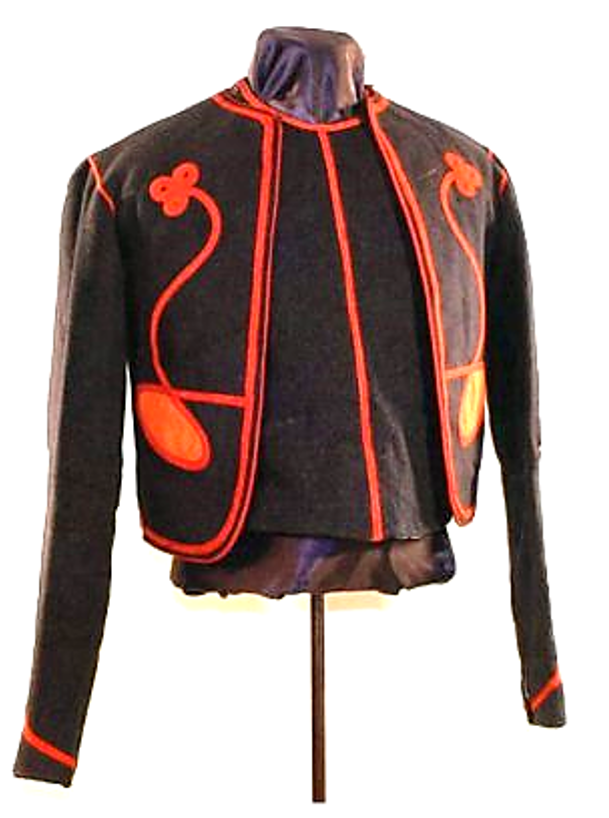
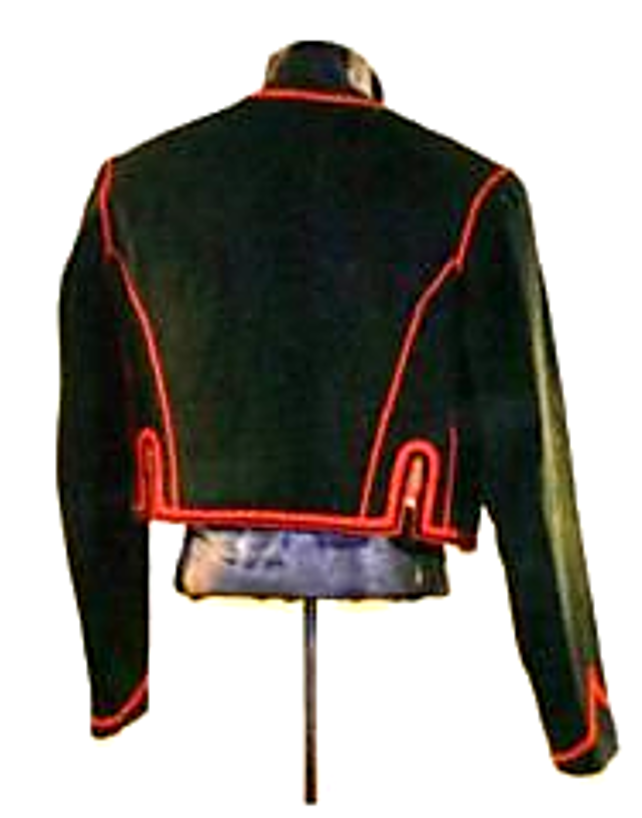
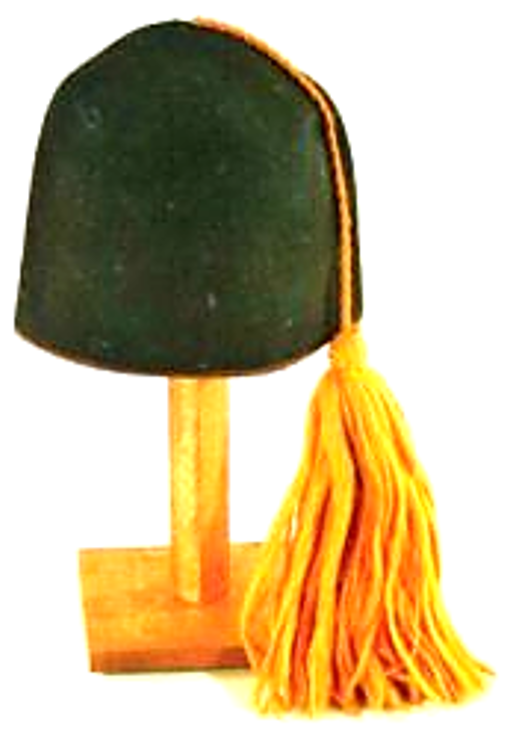
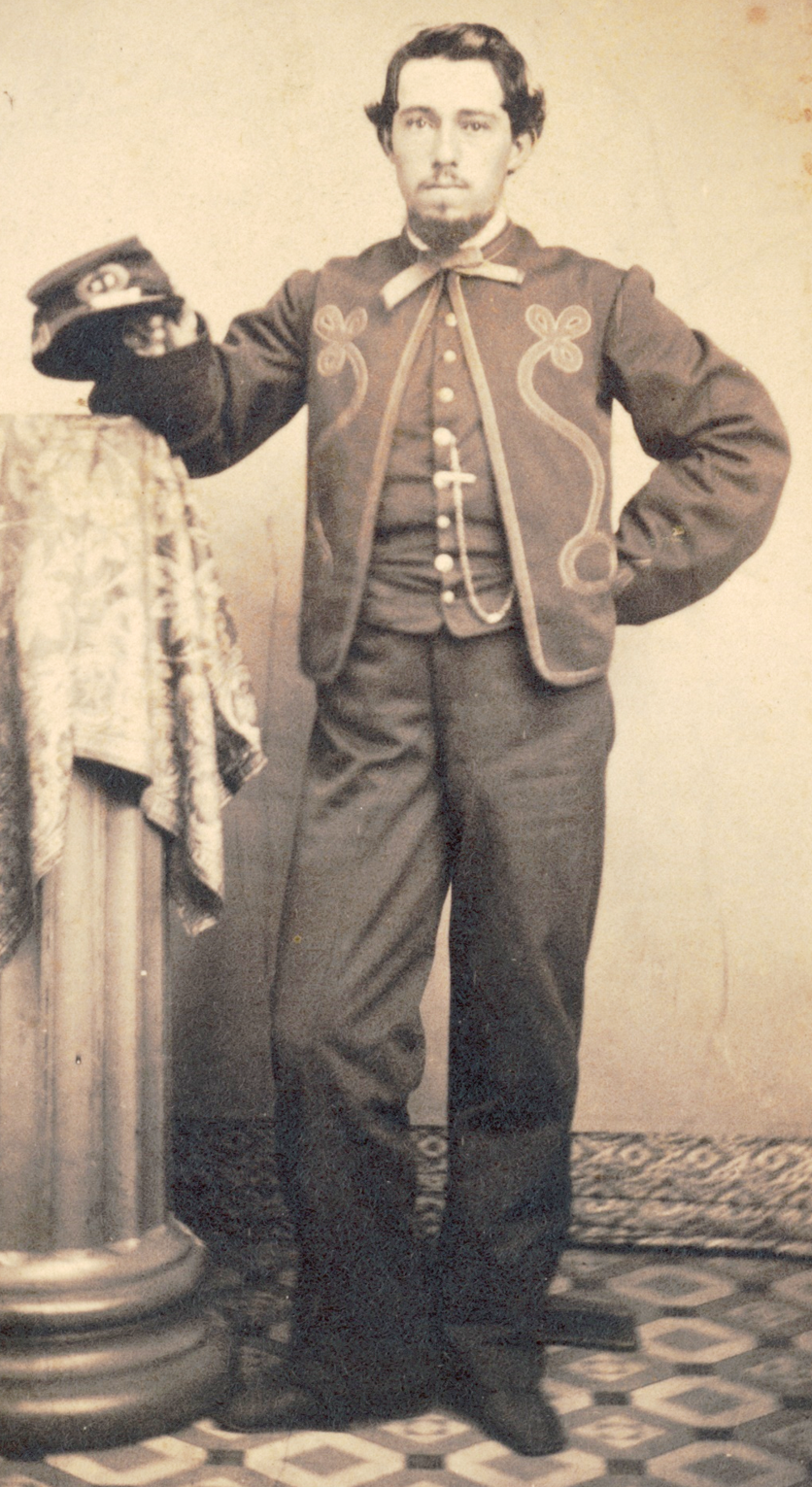
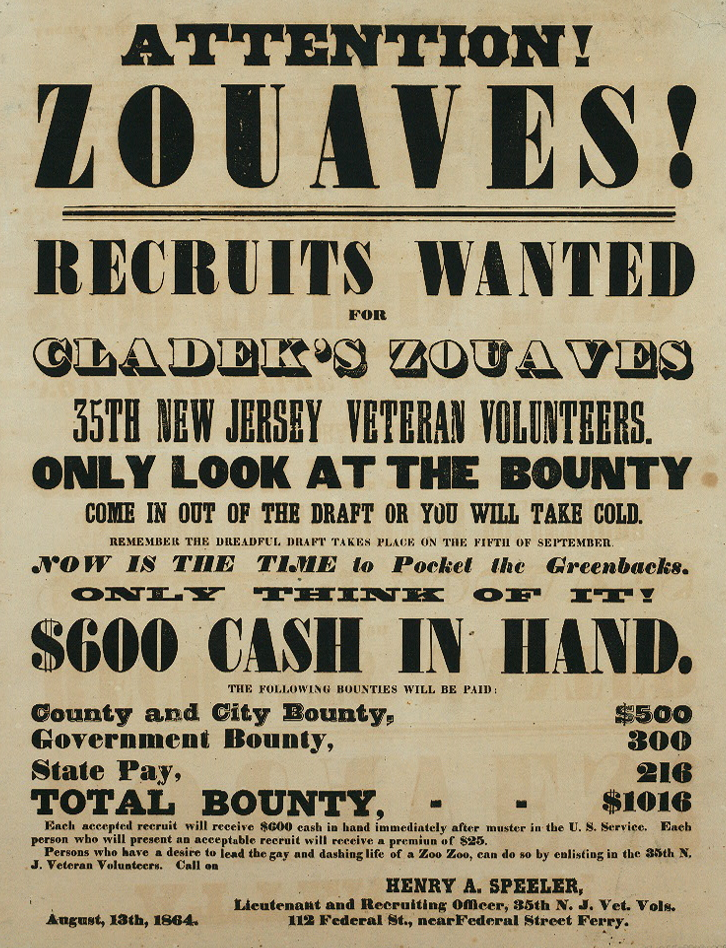
The following historical information is about the service of both the regiment, and the men, of the "Cladek Zoauves" - Thirty-fifth (35th) New Jersey Volunteer Infantry Regiment, which served in the American Civil War from August 28th, 1863, to July 20th, 1865. If you have any corrections, suggestions, or additional information, photographs, artifacts, etc., that you wish to contribute, feel free to submit the information to the Webmaster.
The first engagement of any importance in which the regiment participated, occurred on the 13th and 14th of May, before Resaca, Georgia, to which the rebel army under General Johnston had fallen back from Dalton. On the morning of the 13th, the Thirty-fifth, which belonged to the Fourth Division of the Sixteenth Corps, was ordered to advance, which it did for a distance of some five miles, when line of battle was formed, and the advance was renewed, the troops pushing over hills and through ravines, until the extreme front was reached. The regiment was now in an open plain, with the enemy only some two hundred yards distant, concealed by bushes, from which he at once opened fire. The fire, however, was promptly returned, compelling the rebels, numbering two regiments, to abandon their position in some disorder. The Thirty-fifth, then obtaining the cover of the woods (but pursuit being deemed imprudent), was ordered to the left as a support to a battery. Here the men were peculiar]y exposed, being not only in line of the shots of the enemy, but liable to be crushed by the falling branches of trees severed by the balls and shells of our own guns. The regiment, however, stood bravely at its post, holding the ground during the night - having lost during the day one man killed (Rudolph P. Cain, of Company K) and thirteen wounded. On the morning of the 14th, the enemy again opened fire, no reply, however, being made by our line. About noon, the Thirty-fifth was ordered up as a support to a storming party, and being obliged to move along a narrow road and across a bridge, suffered some loss from the musketry of the rebels, of whom there were two brigades in front. The regiment, however, bravely performed its part, and being afterwards ordered to the right to assist in checking an advance of the rebels, successfully executed that duty also, repulsing the enemy and holding and intrenching the ground it had occupied. Here, behind the hastily constructed works, the command remained during the whole of the following day, repelling all assaults and inflicting serious damage on the enemy. Resaca being evacuated, on the 15th Captain Angel, with two companies, was sent into the town, where he captured thirty prisoners and took two mails. Among the wounded in these two days' operations were Lieutenants S.J. Harman and E.G. Smith. The total casualties amounted to two men killed, two officers and twenty men wounded. The enemy having withdrawn, our army at once pressed forward in pursuit, capturing Rome and Kingston, appearing in the vicinity of Dallas on the 25th. The country traversed was very rugged, mountainous and densely wooded, with few and obscure roads, and the march was attended by many discomforts; but the troops submitted cheerfully to all fatigues. At Dallas, Johnston had concentrated his forces with a view of checking our further advance, his intrenched lines extending from Dallas to Marietta, over a most difficult region. Here two days were spent, amid skirmishing and fighting, in making careful approaches - a fierce engagement taking place on the 25th, near New Hope Church, four miles north of Dallas, between Hooker's Corps and a part of the rebel force. On the 27th, Johnston struck our right at Dallas, but was repulsed with loss. On the same day, the Thirty-fifth was again engaged, two companies under Captain Angel being deployed as skirmishers, and charging the enemy with great gallantry, driving him from an eminence which other regiments had entirely failed to carry. Subsequently, however, the rebels advancing two lines of battle, the Jerseymen were obliged to fall back, which they did in good style. During the two following days the regiment was almost constantly engaged on the skirmish line, losing altogether four men killed, eight wounded and one missing. The killed were Michael Furry and Theodore Case, of Company E, George Pratt, of Company F, and William Cordham, of Company I. On the 1st of June, moving his army to the left along the rebel front and enveloping Altoona Pass, Sherman compelled the enemy to evacuate that position, and also to fall back from the intrenchments covering New Hope Church and Ackworth. Altoona Pass was promptly garrisoned and made a secondary base of supplies, and the communication between that point and others in the rear being fully restored, Sherman again moved forward. On the 5th, the Thirty-fifth regiment was ordered to the flank, and after constructing an earthwork, was advanced to Ackworth and thence to Big Shanty, where our forces were rapidly concentrating, preparetory to a fresh demonstration. Kenesaw mountain, with its almost equally formidable neighbors, Pine and Lost mountains, now stood in Sherman's path. On the peak of each of these mountains the enemy had his signal stations, and in front of the points not impregnable by nature, Johnston had arrayed strong lines of battle, the left resting on Lost Mountain and the right extending across the Marietta and Ackworth road. By the 11th of June, Sherman's lines were close up, and he made dispositions to break the enemy's lines between Kenesaw and Pine mountains. On the 14th and 15th, while Hooker and Howard were pushing the enemy, the Thirty-fifth Regiment was engaged on the skirmish line, losing seven men killed and eight wounded - Captains Courtois and Frazer being among the latter. On the 10th it marched to Kenesaw and participated in the movements against that position until, after constant battering and murderous fighting extending over a fortnight, Sherman determined to throw his whole army rapidly by the right to threaten Nickajack Creek and Tanner's Ferry, across the Chattahoochee. This movement compelled Johnston to abandon Kenesaw, and on the 3d of July it was in our possession. On the 2nd, while advancing upon the rebel works near Nickajack Creek, the skirmishers of the Thirty-fifth had another smart engagement, during which Acting Major Angel, while only thirty yards from the rebel position, was killed. No officer in the regiment had displayed higher soldierly qualifications or was more generally beloved; and his death was sincerely lamented, not only in his own command, but throughout the entire brigade. Immediately upon Johnston's withdrawal, our whole army pressed forward in pursuit. On the 8th, the Thirty-fifth entered Marietta, proceeding thence to the Chattahoochee, which it forded on the 9th. Intrenching strongly, the regiment, with the rest of the army, rested for some days, Johnston meanwhile taking up a new line covering Atlanta, but being superseded in command by General J. B. Hood only a day or two after. On the 19th, the Thirty-fifth, having resumed its advance, reached Decatur, proceeding the day following to the front some three miles, but returning on the 20th, and participating on the 22d in the engagement at that place. At this time, three regiments of the brigade, with an aggregate strength of fourteen hundred effective fighting men, were posted in different parts of the town as a garrison, being commanded by Colonel Sprague of the Sixty-third Ohio. About noon on the 22nd, the command was attacked by an overwhelming force of infantry and cavalry, and the men being so scattered as to render prompt co-operation impossible, successful resistance seemed out of the question. The Thirty-fifth, however, promptly formed and moved to the right and front to support a line of skirmishers, who, as it reached the position designated, were already retiring in confusion. But the men of the Thirty-fifth moved steadily into line of battle, and at once opened on the rebels, checking them for some minutes. Soon, however, they advanced with added force, and the regiment, vastly outnumbered, gradually fell back for a distance of thirty yards, when it again turned and poured a deadly volley into the ranks of the pursuers, causing them in turn to fall back. But their repulse was but for a moment. Promptly rallied by their officers, the rebels once more advanced, and although the Thirty-fifth a third time turned upon them and held them for half an hour, it was at last compelled to retire finally to the town. Here the regiment was joined by the rest of the brigade, but the enemy coming in on all sides, the entire command continued the retreat, suffering severely from the fire of the pursuers - the casualties in the Thirty-fifth numbering one killed and sixteen wounded, with a loss of two officers and thirty-seven men missing. The picket line during the day was in charge of Lieutenant-Colonel Henry, who displayed great coolness, but many of the men being cut off, fell into the hands of the enemy. Among the captured were Captain Augustus Dusenberry and Lieutenant David S. Oliphant. On the 23d, the enemy having withdrawn, the Thirty-fifth re-entered the town and intrenched, but on the day following moved to the front, taking position in the rifle-pits in front of Atlanta. Here the army was confronted by a strong line of rebel works, two miles from the city, and heavy fighting had already taken place at various points in front of the position, resulting in a rebel loss of seven or eight thousand men. Sherman, resorting again to strategy, on the night of the 26th shifted one of his corps from our extreme left to the extreme right, initiating a general movement to flank Hood out of Atlanta by cutting the railroads in his rear. This movement, although detected by the enemy, was substantially accomplished, and our men were hastily covering their new front with a wide breastwork when, on the 28th, Hood poured out in strong force on the west side of Atlanta, striking our right, held by Logan's (Fifteenth) Corps, with great violence. The Thirty-fifth regiment at this time, having the previous day driven in the rebel skirmishers, had taken position in the line to the left of the Fifteenth Corps; but as the enemy, after a fierce cannonade, advanced on our right, it was moved forward to the support of Smith's Brigade of the corps assailed. The advance was made under a sharp fire from the rebel guns, but the men, cheering lustily, moved steadily into position and soon became hotly engaged. The regiment being posted in the edge of a woods and somewhat protected by a barricade of logs and rails, had an advantage in position, and it improved it fully. Seven distinct times the enemy advanced to the assault, and as often was bloodily repulsed. As the day waned, other regiments came to the support of the Thirty-fifth, but they were not needed, the position being held until the enemy, broken and vanquished, finally withdrew, leaving his dead upon the field. In this engagement, the flag of the regiment was riddled with bullets and the State standard was twice shot down but as many times replaced. The loss of the command was very slight, only five men being wounded. This was the last serious engagement in which the regiment participated in this campaign. On the 1st of August, the Thirty-fifth advanced its position and took possession of a line of partially completed rifle-pits, which it held until the 11th, meanwhile assisting in the construction of works at the front. On the 10th, a shell from the enemy's guns exploded in the camp of the regiment, killing one and wounding six men, two of whom subsequently died. On the 11th, being ordered on the skirmish line, the regiment drove the enemy's pickets out of their pits and took possession, losing two men wounded in the movement. On the 25th, the regiment was detailed to guard the train of the Sixteenth Corps, and continued on this duty until September 8th. Atlanta meanwhile had been evacuated, and our forces were in possession, so that, the arduous work of the campaign having been completed, the Thirty-fifth, having reported for orders, was sent into camp near East Point, having fairly earned, by gallantry in action and endurance on the march and in the trenches, the rest which it was now to enjoy. During the month of October the Thirty-fifth participated in the movement of a portion of the army to Marietta, Big Shanty and other points menaced by the rebels under Hood, but was only once actively engaged, namely, at Resaca, on the 15th, where the regiment lost twenty-five killed and wounded. During the month, the regiment marched in all two hundred and twenty-one miles. In the early part of November, Sherman concentrated his forces around Rome and Kingston, Georgia, and on the 14th, having completed all his plans, cut loose from his base, and set out on his march to the sea. The Thirty-fifth, still attached to the Sixteenth Corps, broke camp on the 15th, and during a considerable portion of the march was employed in destroying railroads, guarding trains and foraging on the country - marching during the month two hundred and eighty-two miles in all. On the 2nd of December the command struck the railroad at Millen, formerly a rebel prison camp, whence the prisoners had been removed on the approach of our cavalry. On the 5th, the regiment was engaged as a support to the cavalry advance, but suffered no casualties. On the 9tb, the regiment again came up with the enemy, and being deployed as skirmishers advanced over very difficult ground, driving the rebels before them, and keeping up a running fight for a distance of four miles - our men passing through two lines of the enemy works. During the day, Corporal Williams was killed by a torpedo, and three or four privates wounded. Only one member of the regiment was wounded during the skirmish. The road being found to be planted with torpedoes, a number of the rebels who were captured were compelled to dig them up, which they did with some reluctance. On the 10th, when within six miles of Savannah, the regiment was again formed in line of battle in front of the first line of the enemy's defensive works, but later in the evening breastworks were thrown up, and the men permitted to enjoy a brief rest. On the 11th, firing was kept up all day between the opposing forces, but the Thirty-fifth being moved to the rear, did not participate therein. On the 13th, Fort McAllister on our left was taken, and Sherman having got up heavy guns wherewith to bombard the city, on the 21st compelled its evacuation, our forces marching in on the following morning. While these operations were in progress, the Thirty-fifth remained on picket duty, but on the 3rd of January, 1865, it moved through Savannah to the Savannah River, where it embarked on the steamer S.R Spaulding and proceeded to Port Royal, whence, with other troops, it was pushed forward to Pocotaligo. At length, on the 1st of February, the floods which had for a time impeded operations having abated, the entire army again moved in a northerly direction. In this advance, the troops were obliged to wade swamps several miles in width, often covered with water to the depth of three or four feet. In one case, the brigade to which the Thirty-fifth was attached, advanced through a deep morass, in the face of a terrific fire, driving the enemy from his works - the men of the Thirty-fifth being engaged during the fight in carrying ammunition through the swamp to the troops, who in some places fought up to their arm-pits in water. On the 12th, the regiment reached and passed through the town of Orangeburg, and four days after reached the city of Columbia, moving thence by way of Winnsboro to Cheraw, where it did provost duty for several days. Still moving forward, Fayetteville, North Carolina, was reached on the 11th of March, where a halt of two days was made. On the 13th, the army again moved forward, a part advancing towards Averysboro, and the right wing marching towards Goldsboro. The Thirty-fifth, moving with the latter column, did not participate in the fighting at Bentonville, where the Thirteenth Regiment rendered such important service, but was not idle, being employed in guarding the wagon trains and caring for the sick and wounded - Colonel Cladek having command of the whole. Goldsboro being reached, and the enemy having retreated on Raleigh, the army again encamped, the men being re-clothed and furnished other long-needed comforts. The march from Savannah had been one of great severity, and the suffering of the troops had been very great, but they had submitted to all without complaint. From first to last, the Thirty-fifth exhibited the hardiest endurance, with a commendable readiness for any duty which might be imposed; and its reputation was deservedly high throughout the entire corps to which it belonged. On the 3d of April, Captain Dusenberry, who had been taken prisoner on the 22nd of June, rejoined the regiment with one hundred and twelve substitutes, and was heartily welcomed by officers and men. On the 10th, Richmond having fallen, Sherman impelled a determined advance against Johnston, who, with some forty thousand men, still remained near Smithfield. This town was entered the following day, the enemy retreating to Raleigh, and thence towards Greensboro. The news of Lee's surrender being received, Johnston at once asked a suspension of hostilities, and this being granted, negotiations were entered upon which, on the 26th, resulted in the surrender of his army upon the terms already accorded to Lee. The Thirty-fifth had fired its last gun in this grand contest for national unity, and all that now remained was to march homeward, rich in the honors it had won. On the 29th, the regiment moved out from its camp towards Petersburg, which was reached May 8th. Thence, passing through Richmond, it marched by the usual route to Washington, arriving in that vicinity on the 19th. Here the men were supplied with a new Zouave uniform, and some weeks later being mustered out, proceeded to Trenton (July 22d). where their campaigns terminated in a cordial welcome from the populace.
|
||||||||||||||||||||||||||||||||||||||

 (
(